Chapter 7 of 12
The law of the villages
Innocents, criminals and murderers. Guards, bounties and stealing.
The color of a name
The color of the name over a head tells you who you're dealing with:
- blue — innocent;
- gray — criminal: attacked an innocent or looted their body (for two minutes anyone can hit them without penalty);
- red — murderer: has five reported kills to their name;
- yellow — invulnerable merchants and bankers;
- orange and green — shinobi of a village yours is at war or in alliance with.

Protected zone
Nobody can be attacked in towns and villages. There's one exception — a guard. Attacking one is a crime the whole watch chases you for.
Guards stand by the gates and the Kage tower, in their village's colors and with its elements. They see criminals, murderers and enemies of the village, shout "Halt!" and strike them down with one blow. After you log in or wake up you have a minute to leave.

Kills, reports, bounties
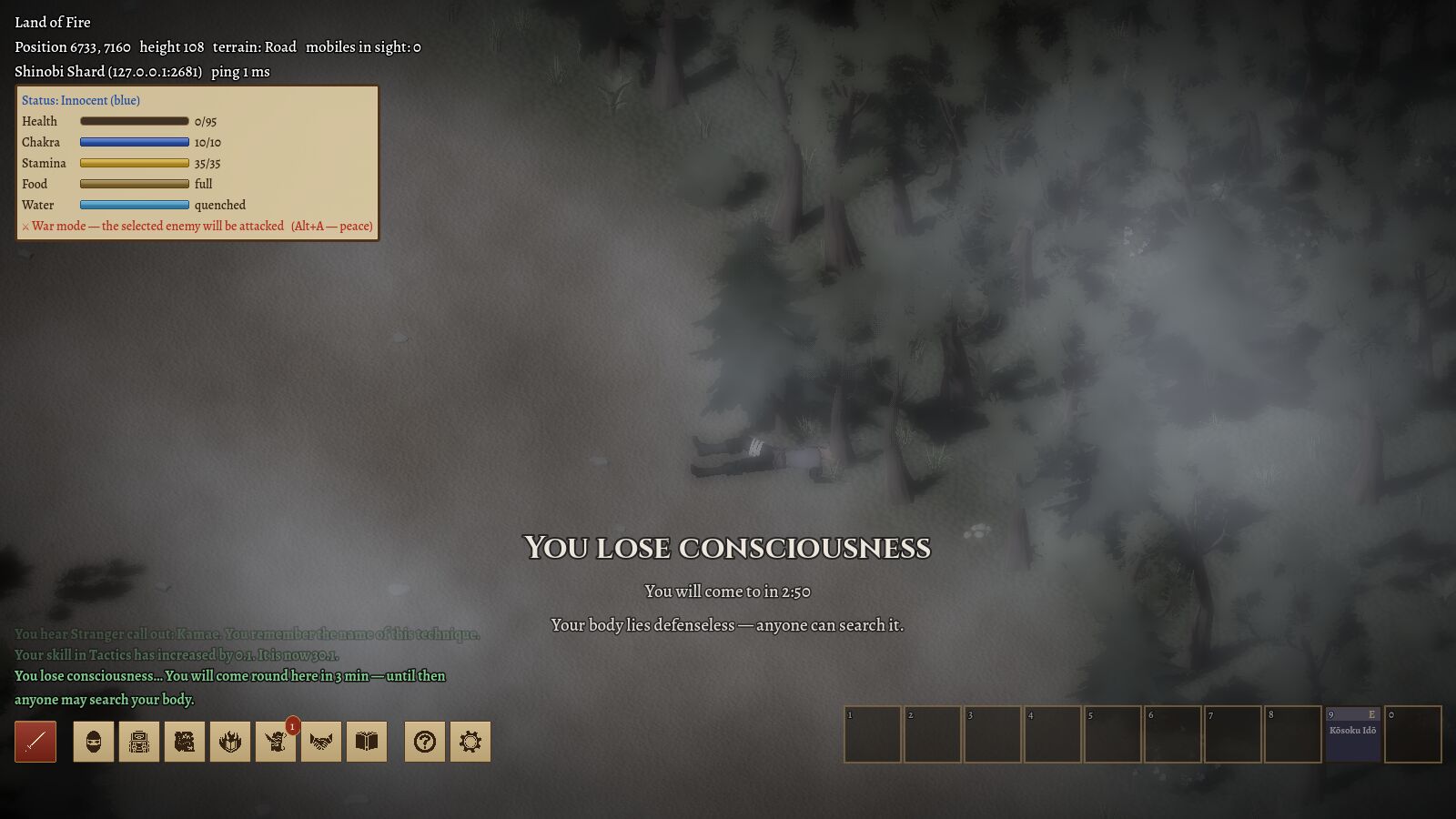
Whoever falls at a player's hand can, on waking up, report the killer or forgive them. Five reports — and the killer's name turns red, and they go on the wanted list.
Anyone can add ryō to a murderer's bounty. Whoever defeats them takes it (unless a guard gets there first). The guilt expires after forty hours without a new crime.

Stealing
Everyone's paperdoll has a backpack. Double-click it — you look inside. Dragging something into your own backpack is an attempt to steal.
The owner, and players and guards nearby, can catch you — their Detecting Hidden against your Stealing. Whoever is caught robbing an innocent becomes a criminal, and the watch moves.
Loot from the fallen
The owner always takes their own things. Whoever loots an innocent's body becomes a criminal — the corpse window warns you. The bodies of criminals, murderers, beasts and bandits are free loot, and so are enemies during a war between villages.