Chapter 11 of 12
Survival
Hunger, thirst, being well fed after a good meal, fatigue, wounds and poisons.
Hunger and thirst
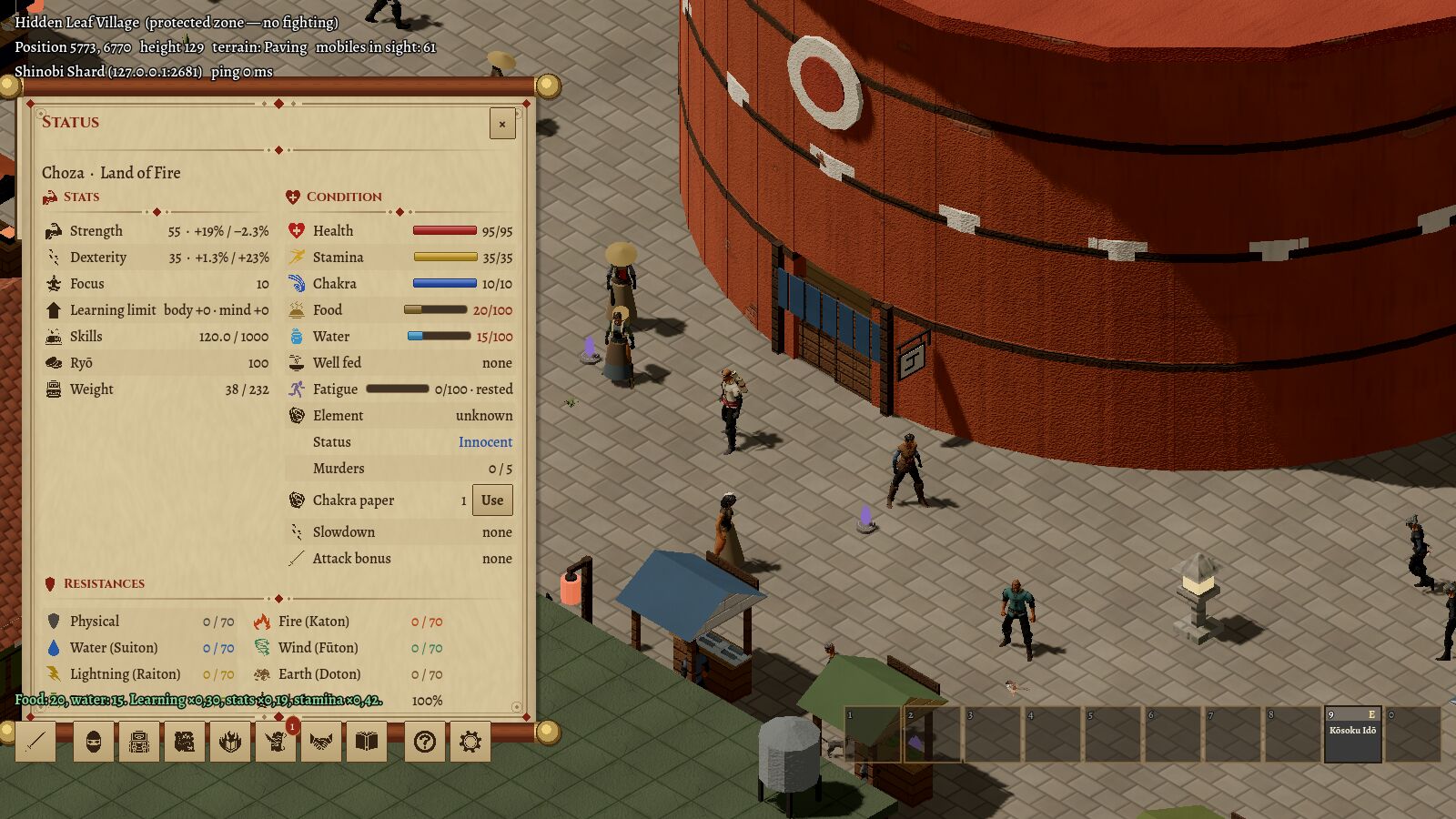
Out in the world you slowly get hungry and thirsty — a full stomach lasts a few hours. The "Food" and "Water" bars are in your status and on the screen.
Hungry and thirsty, you learn slower and tire faster. Eat and drink by double-clicking in your backpack; by a river or a pond say "drink".
Well fed: good cooking speeds up learning
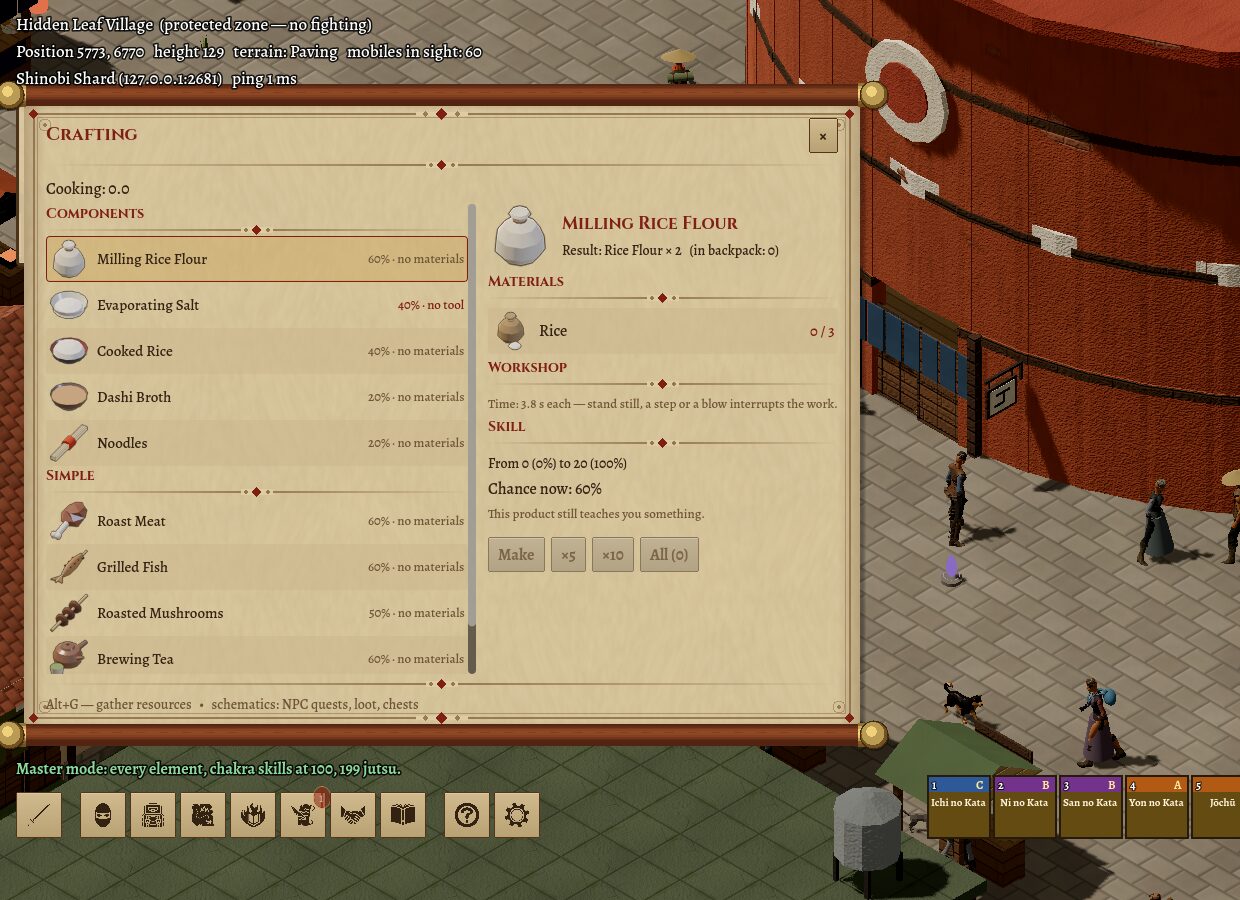
Dishes made by player cooks — sushi, tempura, udon, bentō, nabe, special ramen — speed up learning by 1–5% for an hour while you're well fed. A better one isn't replaced by a weaker one, and no NPC sells them.
Fatigue
An hour of training or fighting tires you. From a certain level of fatigue learning slows down — at full fatigue it nearly stops.
Fatigue passes once you stop training — offline too. Faster with a good meal in your stomach, and tea, sake or matcha take some off at once.
Wounds and healing
- Bandage: stand still, point at yourself or someone next to you. It heals more the better your First Aid and Anatomy; it stops bleeding, and from 60 First Aid it cures toxin too.
- Potions and pills — from alchemists, with a cooldown between sips.
- Medic jutsu — healing, cleansing, and even bringing the defeated round (Iryō Sosei).
- Health, chakra and stamina come back by themselves — faster at rest; Meditation speeds up chakra.
Poisons
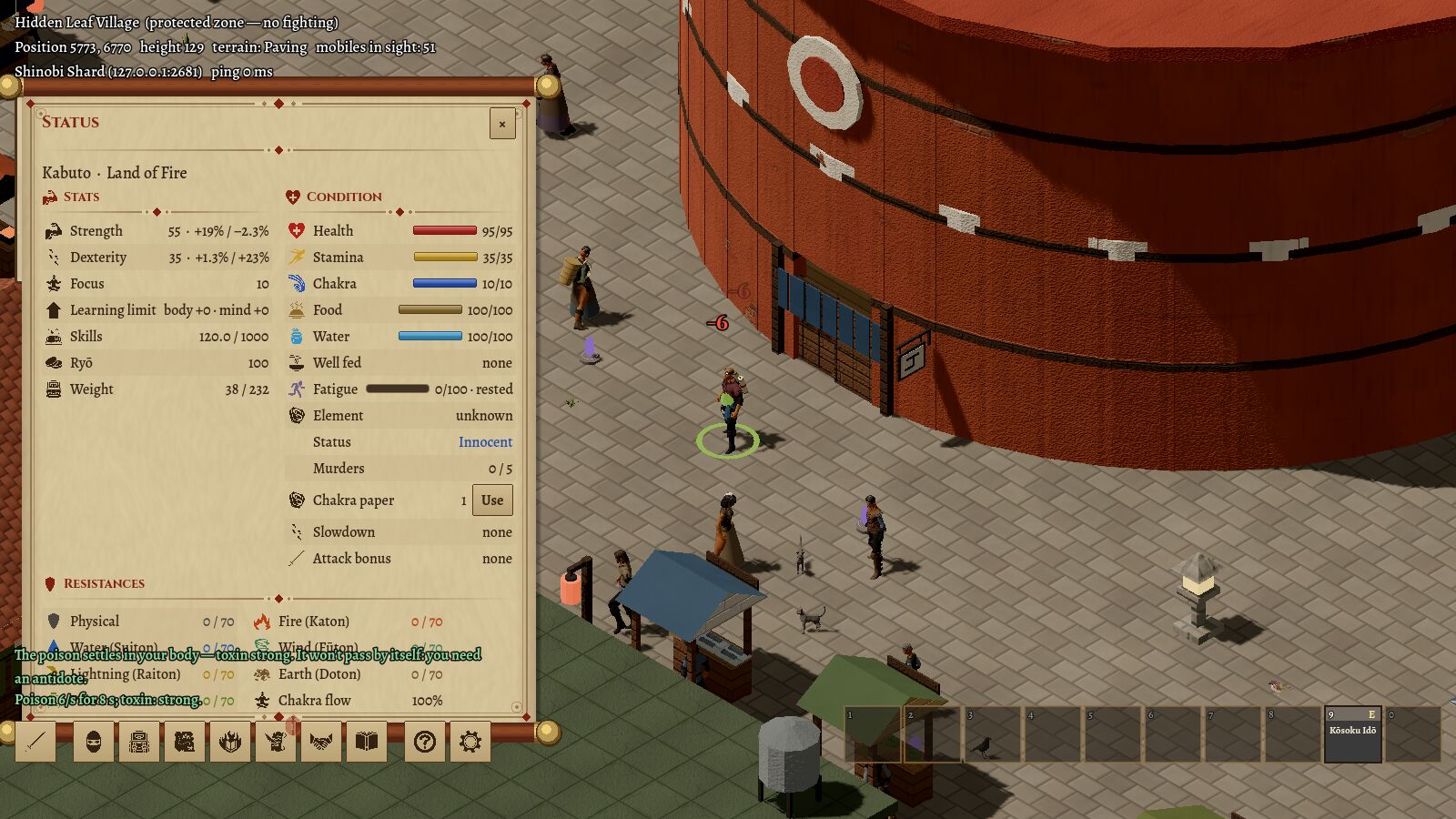
While poison flows, it deals damage every second and the wound won't close — a healing potion won't work: "Antidote first".
Every poison leaves a toxin — light, strong or severe — that doesn't pass by itself, not even after logging out: health, stamina and chakra come back slower, and a strong one spoils your aim. An antidote, a good dressing or a medic cures it.
You coat a blade with poison from a vial — the next few blows poison the enemy.