Chapter 10 of 12
Trade, the bank and notices
Vendors and stalls, the bank, safe trading, lessons from vendors and work from the board.
Vendors and stalls
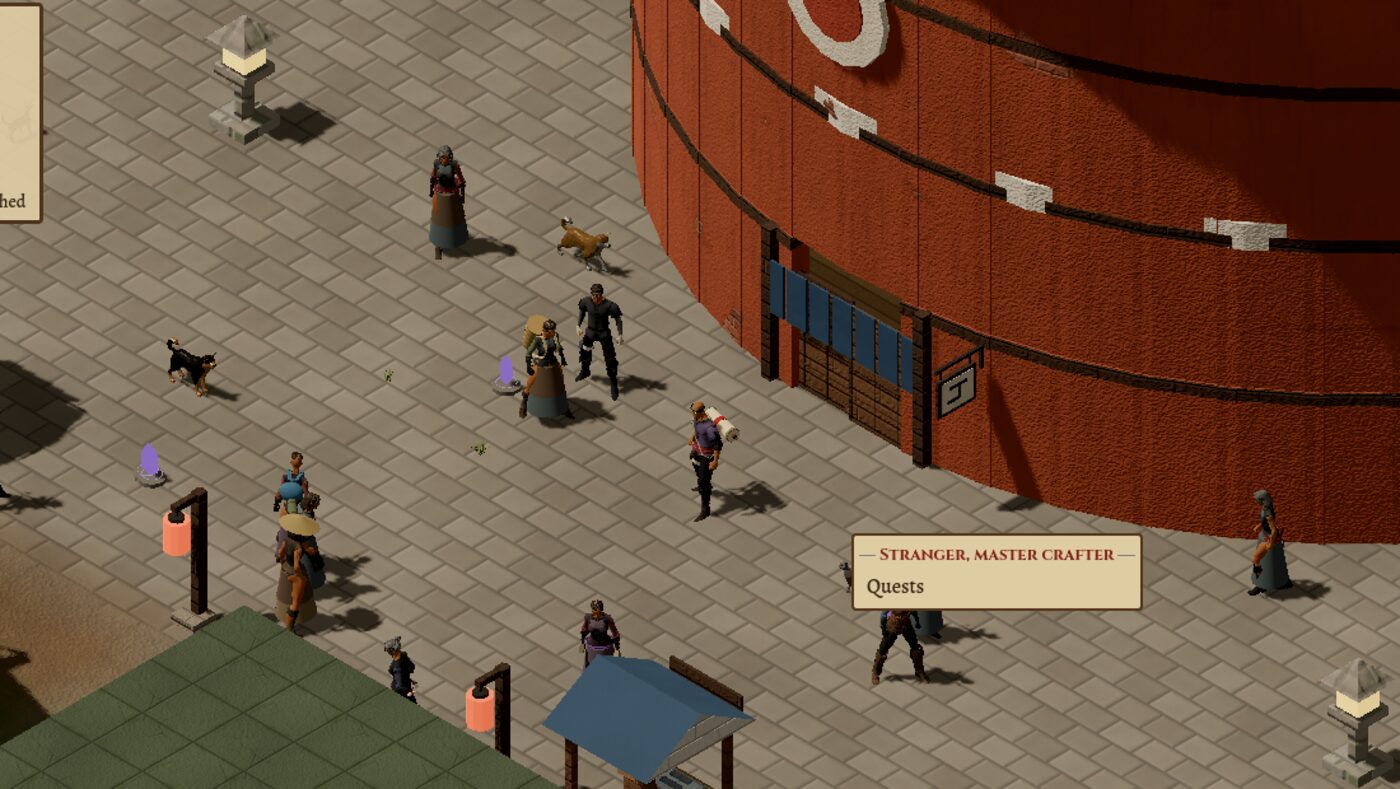
Every shop has a vendor — a blacksmith, a tailor, a herbalist, a cook, a scroll seller, a merchant — and the streets have stalls and booths. Click a vendor once: a menu with "Trade", quests and lessons in their trade. Or say "buy" or "sell" next to them; "I'd like a ramen" buys a single one straight away.
Prices are fixed, and vendors always buy for less than they sell. The best weapons and heavy armor come only from player craftsmen.
Lessons from vendors
Vendors teach the basics of their trade for ryō: in the "Learn" menu you choose how far you want to go (at most 30) and pay for every point. Beyond that — only practice.
The bank
There's a banker in every bank. Every character has one bank box — the same box in every town. Say "bank" next to a banker to open it, or "balance" to hear how much ryō you have in the bank.
You pay with what's in your backpack — the bank won't top it up for you. Short of money? Withdraw ryō from the banker. In return, everything in the bank is safe when you lose a fight.
Trading between players
Drop an item on another player or click "Trade" on their paperdoll. Each of you puts things on your own side and both click "Accept" — every change to the offer clears both acceptances, so nobody can cheat anybody at the last moment.
Walking away, a fight or "Cancel" ends the trade and gives the things back.
Work from the board
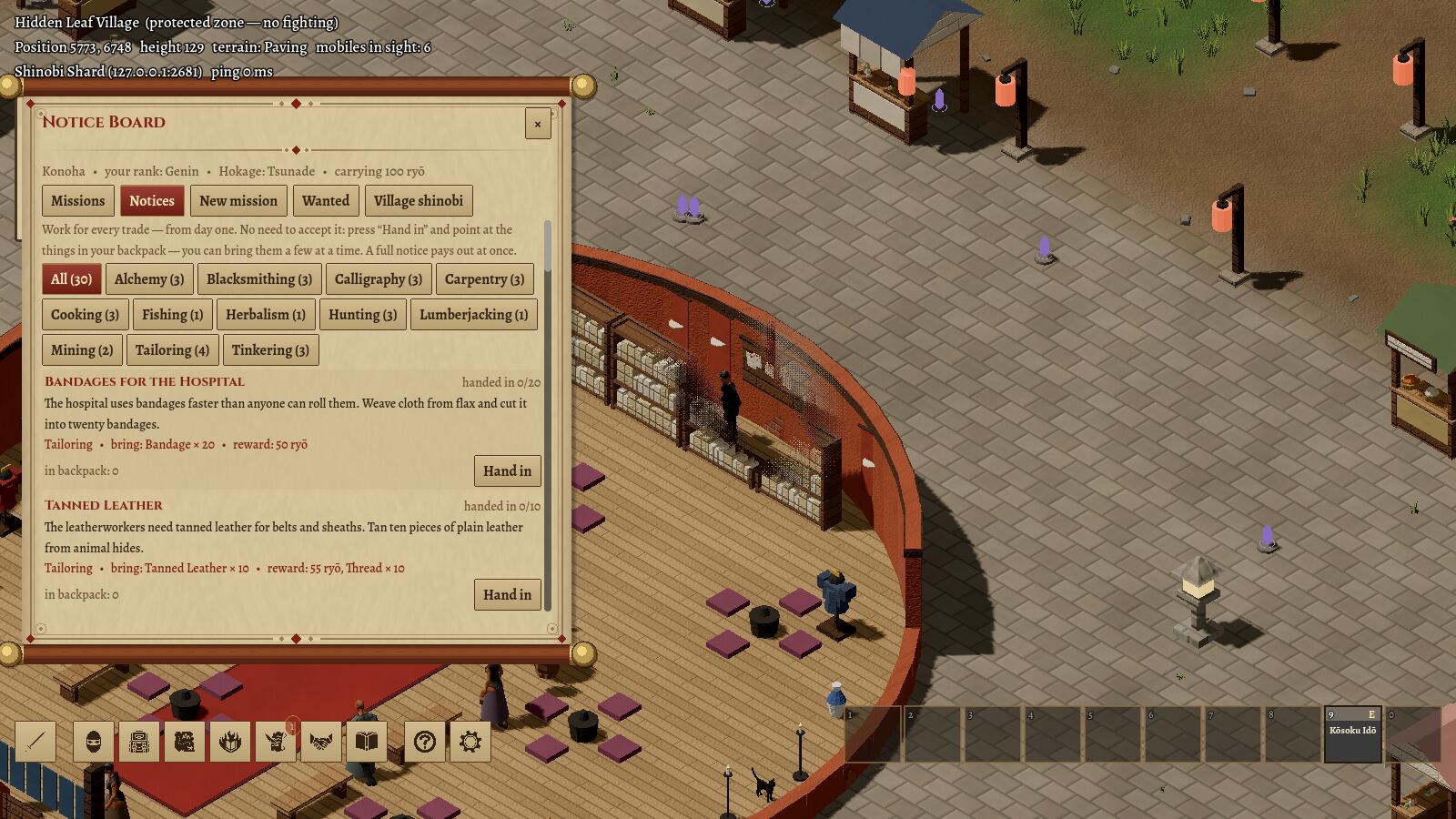
The notice board in every hidden village holds townsfolk notices: bring hides, herbs, boards, bake something, forge something — work for every trade from day one, with filters by category.
Then there are missions from the ranks (hierarchy) and quests from NPCs: bring or defeat, sometimes in chains — the reward is sometimes a crafting schematic.
Calligraphers and scrolls
A calligrapher writes out a scroll of every technique whose notation they know — they don't have to be able to do it. Vendors pay pennies for scrolls, so scrolls are sold to players.
A calligrapher also gives paid lessons: the student gets their first practice of a technique and can go on training alone. Players set the price.